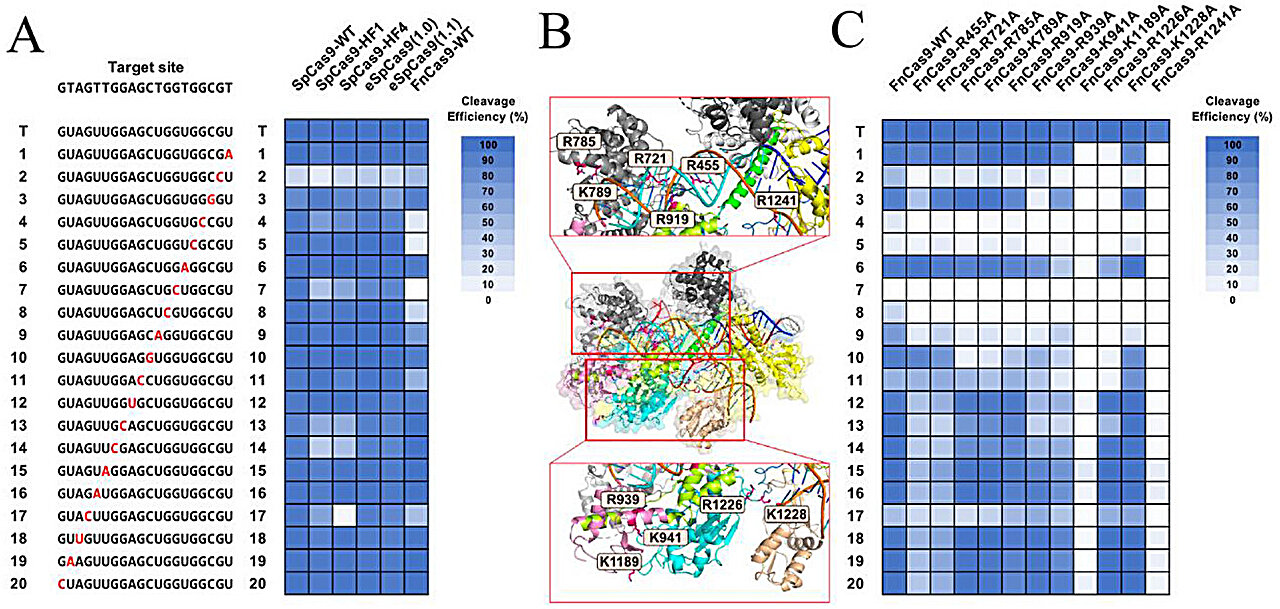
Enhancing the base mismatch sensitivity and specificity of FnCas9 through protein engineering.
Liquid biopsy is becoming increasingly valuable for cancer detection and treatment monitoring, but its effectiveness is limited by the extremely low amounts of tumor-derived DNA circulating in the blood. Researchers developed MUTE-Seq, an ultrasensitive CRISPR-based method designed to detect very low-frequency cancer mutations while lowering sequencing costs and reducing background error noise. The findings are published in Advanced Materials.
The approach, led by Professor Junseok W. Hur of Korea University College of Medicine, is built around FnCas9-AF2, an engineered high-fidelity CRISPR enzyme capable of distinguishing even single-base mismatches. By selectively cutting perfectly matched wild-type DNA, FnCas9-AF2 enriches circulating tumor DNA before sequencing, allowing rare variants to stand out from the noise that commonly affects next-generation sequencing.
In performance tests, MUTE-Seq increased variant allele frequencies by tens of times and enabled detection of mutations at approximately 0.005%, far below typical detection thresholds. In patients with acute myeloid leukemia, it clearly identified minimal residual disease by amplifying weak NRAS mutation signals that are usually undetectable.
Applied in multiplex mode to hotspots such as EGFR and KRAS, the method improved concordance between plasma and tumor tissue, even in early-stage cancers. Additional validation showed twenty- to sixtyfold sensitivity gains and a detection limit of 0.034%. Overall, MUTE-Seq shows strong potential to enhance liquid biopsy accuracy for early detection, MRD monitoring, and tracking resistance mutations.
Image Credit: Advanced Materials (2025). DOI: 10.1002/adma.202505208 (MedicalXpress)
Article can be accessed on: MedicalXpress