
Most people drive through Kruger National Park hoping to spot the Big Five. Few notice the small metallic insects racing across the road beneath their tyres. Yet one of South Africa’s greatest ecological engineers is not a lion or an elephant, but it’s a dazzling bronze dung beetle called Kheper nigroaeneus, better known as the Large Copper Dung Beetle.
Growing to an impressive 25–30 mm in length, K. nigroaeneus is one of South Africa’s largest metallic copper dung beetles and among the heavyweight members of the genus Kheper. It occurs throughout the wooded savannas of South Africa, particularly in protected areas such as Kruger National Park, where healthy populations of elephants, buffalo and antelope provide the fresh dung on which it depends.
What makes this beetle extraordinary isn’t its size or its shimmer, but its sense of direction.
Instead of wandering randomly, the Large Copper Dung Beetle rolls its perfectly sculpted dung ball in a remarkably straight line by reading the position of the Sun and the pattern of polarized light in the sky. This celestial compass helps it escape crowded dung piles before competitors steal its prize. Scientists have even discovered that larger individuals roll larger dung balls faster, giving them a competitive advantage in the race for survival.
But these glittering recyclers do far more than tidy the landscape. Every dung ball they bury fertilises the soil, returns nutrients to the ground, improves water infiltration, reduces parasites and flies, and disperses seeds across the African savanna. Without dung beetles, animal waste would accumulate, grazing lands would deteriorate, and nutrient cycling would slow dramatically.
Although Kheper nigroaeneus is not currently considered threatened, many dung beetle species across southern Africa are under increasing pressure. Expanding agriculture, urban development, pesticide use, fencing, and the decline of large wild mammals reduce both habitat and the steady supply of dung these insects require. Climate change is adding further stress by altering rainfall patterns that trigger breeding and emergence. Conserving wildlife therefore also protects the remarkable insects working quietly beneath them.
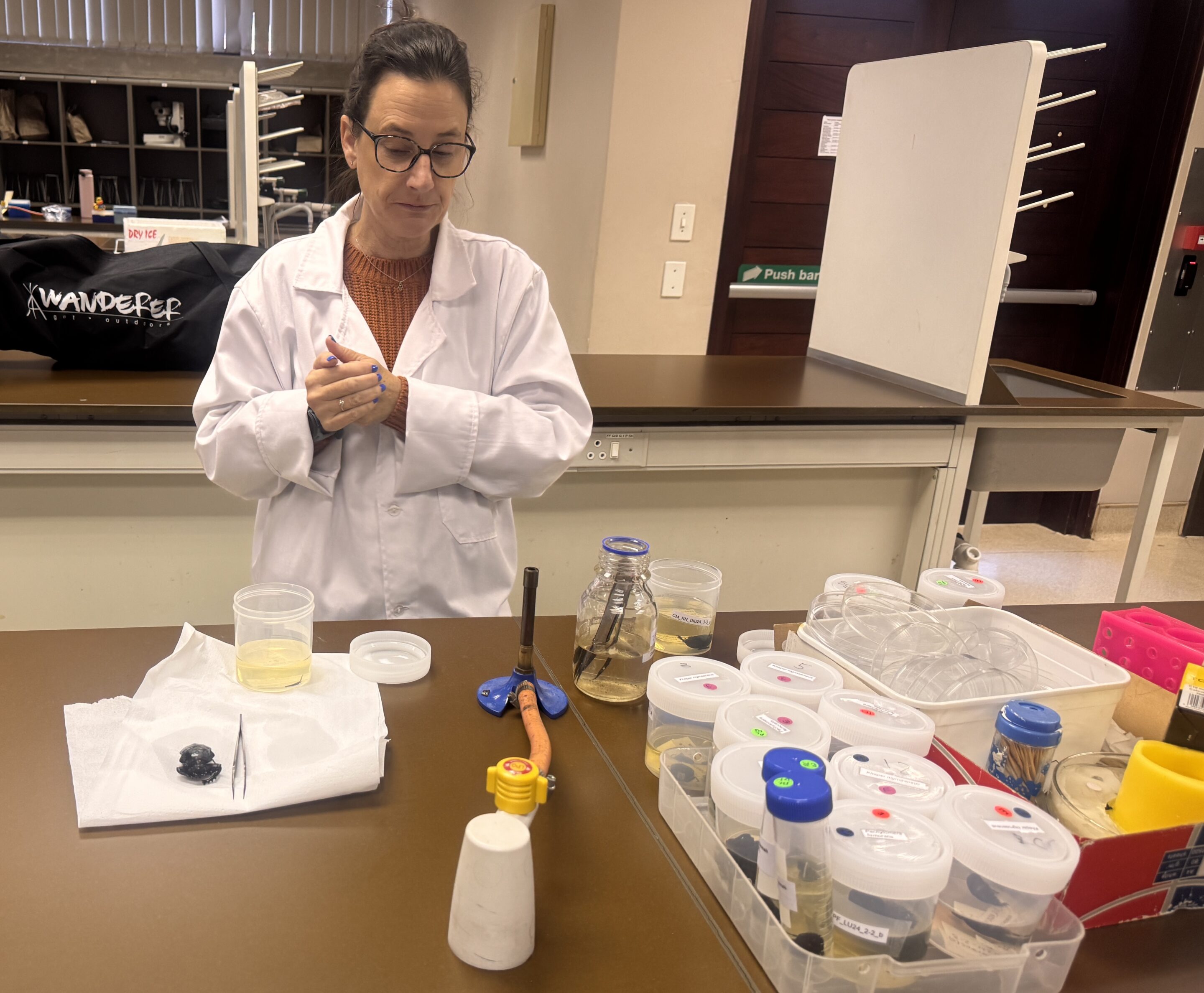
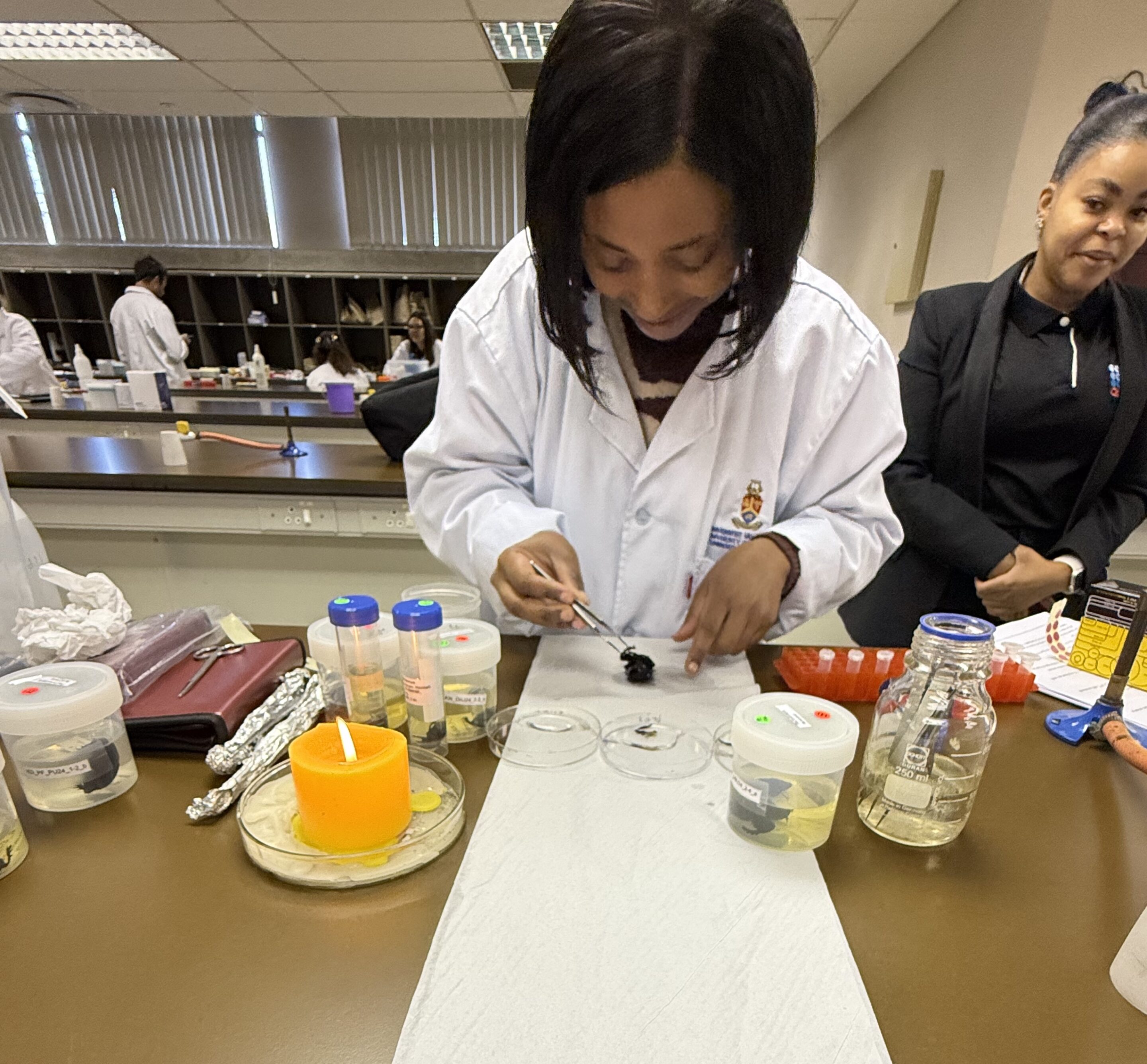
Their importance extends well beyond the field and into modern genetics laboratories. Researchers are interested in sequencing dung beetle genomes to understand evolution, behaviour and adaptation. At the High Molecular Weight (HMW) DNA Jamboree last week obtaining long, intact DNA needed for long-read sequencing technologies such as Oxford Nanopore and PacBio was surprisingly difficult.
The challenge began when preparing the sample material used for extraction. Because dung beetles feed on dung packed with bacteria, fungi and environmental microbes, accidentally puncturing the gut can release its contents over the surrounding tissues. This resulting in contamination with microbial DNA that can complicate data analysis. For this reason, researchers carefully cleaned the exterior of the beetles and used a leg or part of a leg while carefully avoiding the digestive tract to obtain tissue for genomic DNA extraction.
The HMW DNA extraction Jamboree provided an opportunity to test different extraction methods designed to minimise mechanical damage and preserve ultra- very long DNA molecules which are ideal long read DNA sequencing. This data can then be used for modern genome assembly. While further work is still needed before the genomes can be sequenced, the Jamboree was a good start on this journey.
So, the next time you see a bronze beetle rolling what appears to be nothing more than a ball of dung, remember that you’re watching one of nature’s master navigators, an essential ecosystem engineer, and perhaps the next species to unlock new discoveries in genetics. In South Africa’s wild places, the future of the savanna may depend as much on these shimmering copper giants as it does on the animals that leave their precious cargo behind.
_______________________________________________________________
Edited by : Prof Catherine Sole & Renate Zipfel