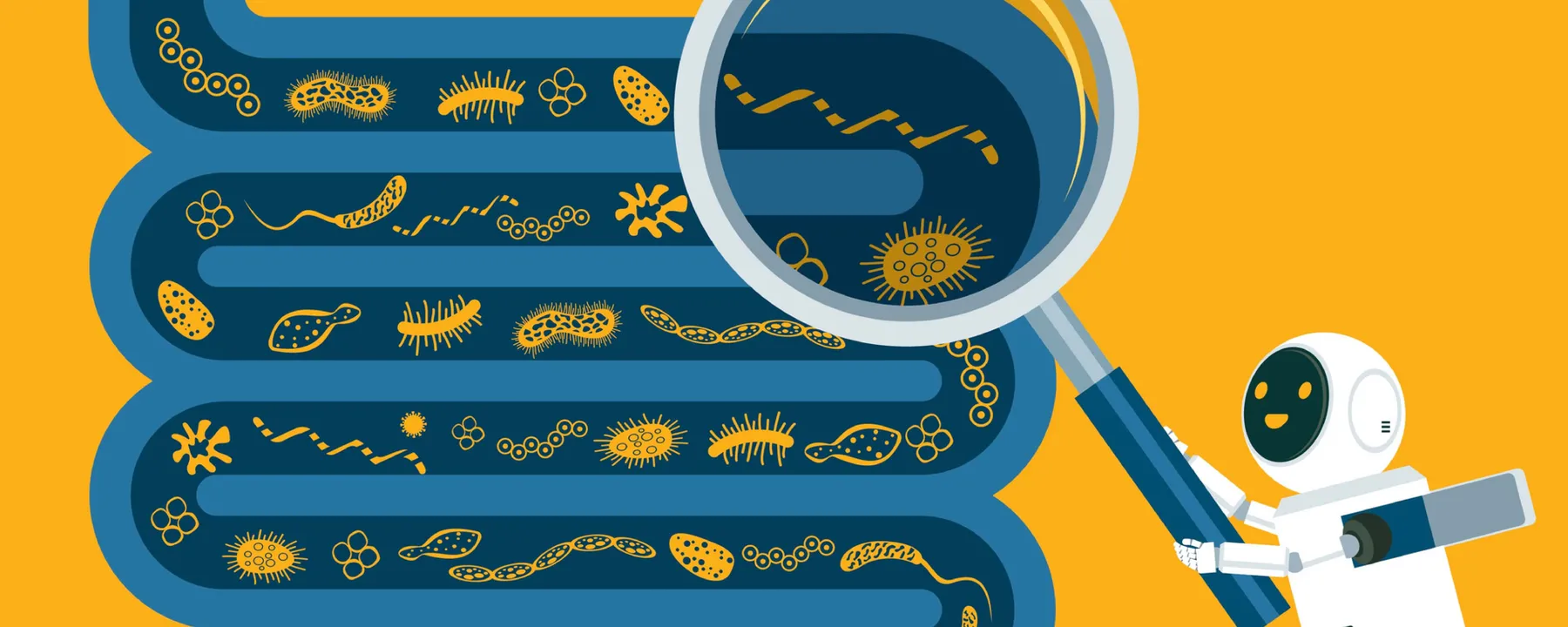
The gut microbiome has been linked to gut health, cardiac and metabolic disease, mental health and drug responses. However, its complexity has made it difficult for researchers to examine the full range of interactions among microbial communities.
Cancer genomicist Jenny Yang became interested in the microbiome while studying cancer genetics and personalised medicine. Drawing on her experience developing translational artificial intelligence tools, she joined Alex Merwin to establish Outpost Bio, an AI-centred biotechnology company focused on studying microbial interactions in the human body. The team is developing an in vitro human microbiome model to investigate how drugs and dietary changes affect microbial communities and how differences between people’s microbiomes influence drug metabolism. Using stool samples, the researchers culture microbial communities to create “gut in a tube” models. They apply genomic and metabolomic analyses to characterise community composition and interactions before using artificial intelligence to identify patterns.
Outpost Bio is building a biobank using samples from geographically diverse populations to capture individual variation. The researchers aim to collect thousands of samples while maintaining consistent methods for collection, storage, culturing and analysis. Their first artificial intelligence model used published human microbiome genomic data and contained more than 500,000 data points. The team is refining the model with data and has worked with external groups to validate the system.
The researchers are now obtaining clinical samples to test their in vitro and computational models. Their longer-term goal is to support the development of drugs that work across more people and improve patient-drug matching.
_________________________________________________________________________________________________________
The article can be accessed on: The Scientist
Image Credit: The Scientist ©iStock.com, sorbetto