Researchers from the Turku Bioscience Center at the University of Turku, Finland, including Professor Laura Elo’s Computational Biomedicine research group, have developed a new machine learning-based algorithm called Coralysis. This method addresses a major challenge in modern single-cell technologies: reliably comparing and matching cell types across different samples where cell numbers or types are highly variable (imbalanced data).
Modern single-cell technologies provide deep insights by characterising the vast heterogeneity of the body’s cells, but current data integration methods often struggle with imbalanced samples, which can lead to inaccuracies.
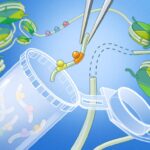
Coralysis, whose lead developer is Doctoral Researcher António Sousa, solves this by operating like a “puzzle assembly.” It progressively integrates cellular identities through multiple rounds of divisive clustering, allowing it to effectively manage imbalanced datasets and uncover hidden cellular patterns that traditional methods miss.
The tool is implemented as open-source software and can build predictive models for cellular identities in new datasets, eliminating the need for cumbersome manual identification. Coralysis also has the unique ability to detect subtle changing cellular states. Published in Nucleic Acids Research, the method provides the scientific community with a robust new way to study cellular diversity and accelerate discoveries in complex single-cell data.
Image credit: Nucleic Acids Research (2025). DOI: 10.1093/nar/gkaf1128 (Phys.org)
Article can be accessed on: Phys.org