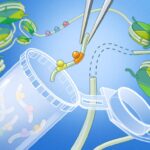
To accelerate the discovery of new antibiotics, microbiologist Cesar de la Fuente develops computational tools to look for (“encrypted”) antimicrobial peptides hiding in the genomes of a wide range of organisms.
Nearly a century after the discovery of penicillin, the search for new antibiotics remains slow and costly. Seeking to accelerate this process, microbiologist Cesar de la Fuente at the University of Pennsylvania is developing computational tools to find new antibiotic candidates as short protein fragments, or peptides.
De la Fuente’s approach involves mining the genomes of diverse organisms, from modern humans to ancient mammoths and Neanderthals. His computational platform operates like a barcode reader, scanning protein sequences for regions with antimicrobial properties. These are termed “encrypted peptides” because their function is hidden within larger, non-antimicrobial proteins.
The team’s research is transforming the timeline of discovery, reducing the process from years to potentially just one or two weeks from discovery to testing. In a 2022 study, they identified about 2,600 encrypted peptides from the human proteome and found that 60% of those synthesized had potent antimicrobial activity, suggesting they represent a novel class of antibiotics.
By using “molecular de-extinction” to study ancient biology, they’ve resurrected molecules like neanderthalin-1 and mammuthusin-2, which modern pathogens have never encountered. The team has also built an open-access catalog of nearly one million new antibiotic candidates from global microbes, hoping to crowdsource the next generation of life-saving drugs.
Image credit: ©iStock, Ole_CNX (The Scientist)
Article can be accessed on: The Scientist