Researchers develop a CRISPR tool that directly edits and screens genes in primary acute myeloid leukaemia cells from patients.
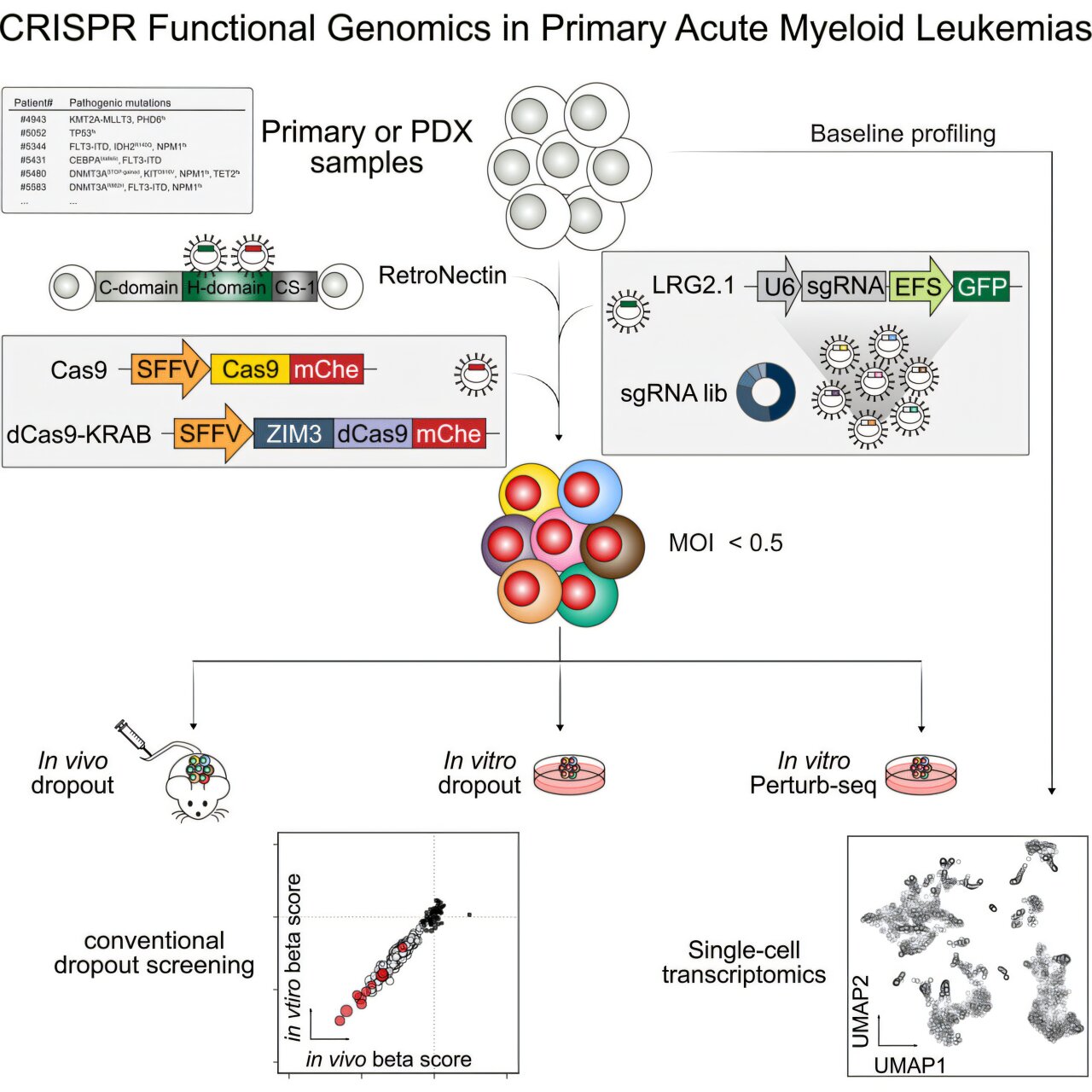
Scientists from Penn Medicine and Children’s Hospital of Philadelphia have created a CRISPR-based functional genomics platform that can efficiently edit genes in primary acute myeloid leukaemia (AML) cells taken directly from patients. This marks a significant advance over traditional CRISPR screens performed in cancer cell lines or preclinical models, which often fail to capture the full diversity of patient tumours.
The new platform enables researchers to test hundreds of gene perturbations at once to identify which genes and regulatory elements are essential for cancer cell survival and growth. By applying CRISPR tools to heterogeneous tumour samples, the study reveals both known and previously unrecognised genetic dependencies specific to individual patient leukemias. These insights could help prioritise targets for future therapeutic development.
In this research, the team optimised CRISPR delivery into patient-derived cells to achieve high gene-editing efficiency and performed screens both in vitro and in preclinical models. They confirmed many established leukaemia “dependency” genes and also uncovered vulnerabilities that vary between patients or subtypes.
Combining CRISPR perturbations with single-cell RNA sequencing provided high-resolution understanding of how different cells within AML samples respond, showing cellular changes in gene activity, state and behaviour
Image Credit: Molecular Cell (2026). DOI: 10.1016/j.molcel.2026.02.003
________________________________________________________________________________________________________________
Article can be accessed on: MedicalXpress