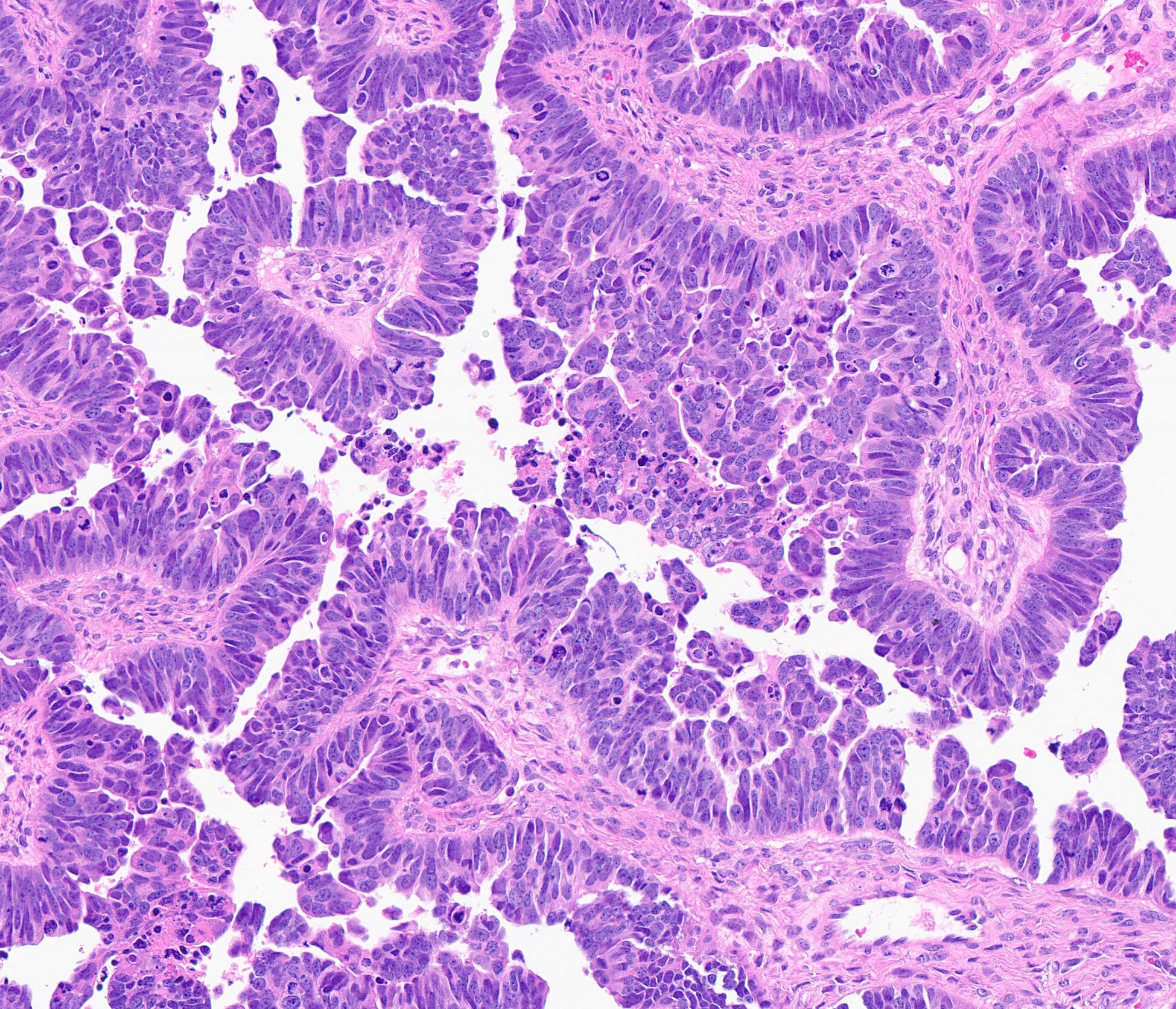
High-grade serous carcinoma cells.
A new study explains the genetic underpinnings of a rare and aggressive form of ovarian cancer and offers a potential pathway for new treatments. High-grade serous carcinoma, the most common type of ovarian cancer, usually begins in the fallopian tube, before spreading to the ovaries and other pelvic organs. The cancer is typically discovered at an advanced stage and becomes resistant to current chemotherapies. Its underlying genetics are complex, with multiple genetic alterations and instabilities. One of the genes involved is CDK12.
In the study, published in the Proceedings of the National Academy of Sciences, researchers from the University of Michigan Rogel Cancer Center report on a new mouse model that shows CDK12 acts as a tumour suppressor to drive high-grade serous carcinoma arising in the mouse oviduct the equivalent of human fallopian tube. A promising degrader targeting CDK12 and a related gene, CDK13, can destroy these tumours.The mouse model used in this work was crucial to the discovery. It was based on a genetically engineered model previously created by Kathleen R. Cho, M.D., in which three genes known to suppress the development of high-grade serous carcinoma were deleted in the mouse oviduct. Here, CDK12 was added for a quadruple inactivation of genes.
The result here enabled researchers to see that in addition to fueling aggressive tumour growth, inactivating CDK12 triggered an immune cell response, recruiting immune T cells to the tumour.
Image credit: Kathleen Cho, M.D.
_____________________________________________________________________________________________________________
By University of Michigan edited by Sadie Harley, reviewed by Robert Egan
Article can be accessed on: MedicalXpress