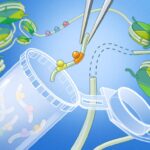
Researchers at the University of Cambridge have identified a new way to suppress the spread of glioblastoma, the most aggressive form of brain cancer. Instead of targeting the tumour cells directly, the approach focuses on altering the surrounding tissue. The team worked with hyaluronic acid (HA), a sugar-like polymer naturally present in the brain. Normally, HA binds to CD44 receptors on glioblastoma cells, providing signals that help them invade nearby tissue.
By chemically cross-linking HA, the researchers made it more rigid, preventing it from interacting with CD44. This effectively reprogrammed the cancer cells, switching them from an invasive to a non-invasive state. Importantly, the method did not kill the cells but stopped their ability to migrate. Professor Melinda Duer, one of the senior authors, explained that “we didn’t have to kill the cells we simply changed their environment, and they gave up trying to escape.” The results were observed even at low concentrations of cross-linked HA, suggesting that the effect is not due to physically trapping the cells, but rather to removing the molecular cues that drive invasion. The glioblastoma cells became dormant within the altered matrix, and their invasive behaviour ceased.
This approach could provide a new therapeutic pathway for glioblastoma, which is currently difficult to treat and almost always recurs after surgery and chemotherapy. Because the method modifies the tumour microenvironment rather than relying on drugs to penetrate every cell, it may also be applicable to other solid cancers. The researchers are now planning animal studies to test the feasibility of moving towards clinical trials.
Top Image credit: Royal Society Open Science (2025). DOI: 10.1098/rsos.251036 (MedicalXpress)
Article can be accessed on: MedicalXpress