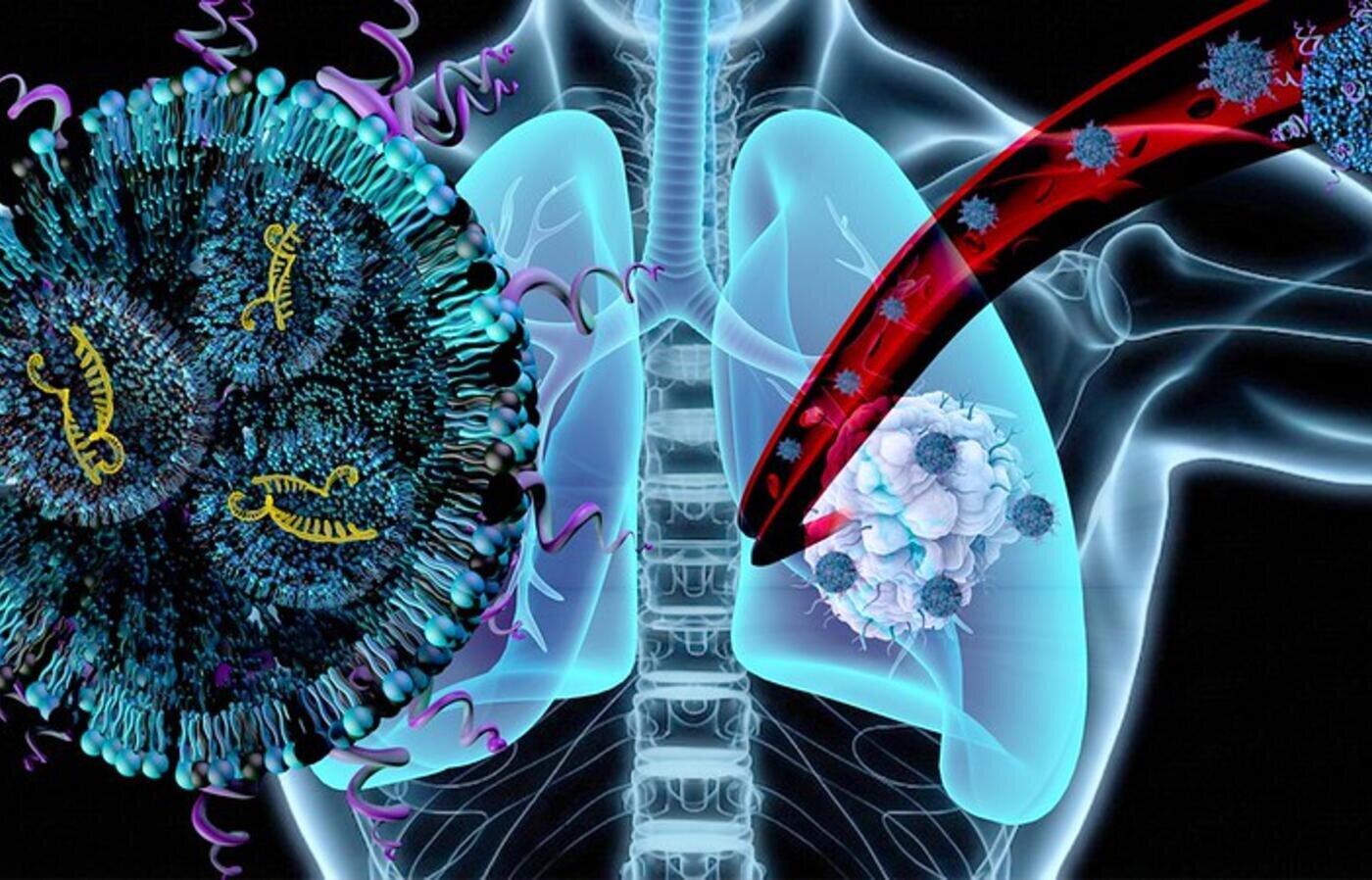
Researchers at Oregon State University have developed a novel technique to simultaneously treat lung cancer and its associated muscle-wasting condition, cachexia. Published in the Journal of Controlled Release, the study details the use of lipid nanoparticles (LNPs) to deliver therapeutic genetic material to lung tumours.
In a mouse model, scientists led by Oleh Taratula and Yoon Tae Goo demonstrated that nanocarriers loaded with follistatin messenger RNA accumulate in tumours. Once there, the mRNA directs cells to produce the follistatin protein, which is crucial for both inhibiting tumor growth and promoting muscle tissue development.
These LNPs can be administered intravenously and are guided to the lungs by vitronectin, a blood serum protein. Vitronectin interacts with integrin receptors, which are overexpressed on tumor surfaces, effectively directing the nanoparticles to lung cancer sites. Taratula noted that this approach offers a promising solution for systemic delivery of mRNA therapeutics to lung tumors, a challenge in the field. This method achieved an approximately 2.5-fold greater reduction in tumour burden compared to conventional LNPs, which tend to accumulate in the liver.
Lung cancer is a prevalent and deadly disease, and cachexia, a severe muscle-wasting syndrome, affects many patients, contributing to up to 30% of cancer deaths. Patients with cachexia experience significant weight and muscle loss despite adequate nutrition.
By using follistatin mRNA-loaded LNPs, the researchers created a therapy that targets both lung cancer and cachexia without adverse effects. While more preclinical work is needed, the early results are encouraging, and the team hopes for future human testing.
_________________________________________________________________________________________________________
The article can be accessed on: Phys.org
Image Credit: Parinaz Ghanbari