
l
CORE OUTCOMES:
- Conceptual understanding of models in biology
- Interpret molecular maps and identify key components/interactions
- Be able to perform basic data to model translation/ simulate or explore model behaviour
- Be aware of certain tools (Cell Collective & BioModels)
2 DAYS TRAINING
Day 1
- Key networks and models in biology
- Molecular maps
- Importance of systems biology and application to disease/digital medicine
- Tool demo (Cell Collective)
- Task: Provide participants with simple biological networks and task them to identify nodes and interactions (genes/proteins, activation/inhibition)
Day 2
- Intro to model checking (does system reach a stable state, are certain genes always active or sometimes inactive in that system)
- Run simulations to demonstrate “stable state”
- Understand behaviour from network structure (what happens when a certain node is “off”)
- Tools demo (Cell Collective + BioModels)
- Task: Incorporate basic model building from simple data
Introduction to Digital Twins??
TARGET GROUP:
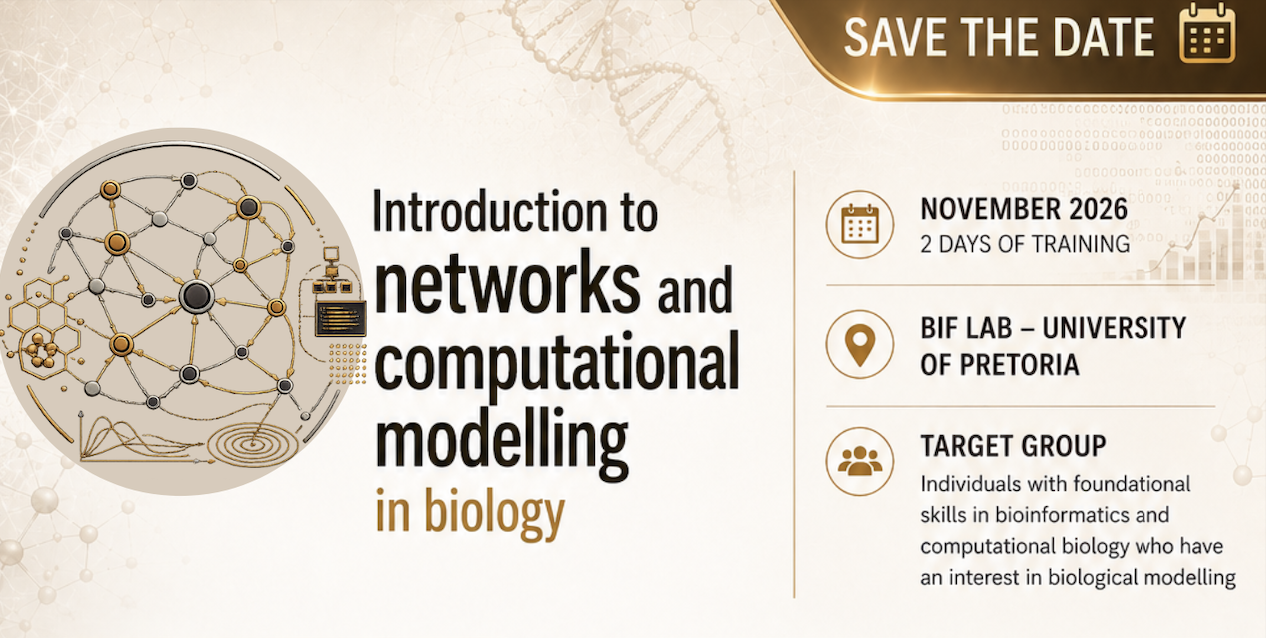
- Individuals with foundational skills in bioinformatics and computational biology who have an interest in biological modelling
Training day structure:
Day 1&2 (6hrs):
09:00-10:00 – Guest lecture
10:00-11:00 – Tea break
11:00 – 12:30 – Introduction to Cell Collective (Day 1). Introduction to BioModels (Day 2). Demonstrate and have a follow-along session (participants will bring their own laptops; tools are web-based)
12:30-13:00 – Lunch break
13:00-14:30- Self-work to complete the task
l
BIF Lab – University of Pretoria